
LA 2028 Men's Volleyball: Six Confirmed Tickets, Six Empty Chairs and One Counting Discrepancy
**সংক্ষিপ্ত উত্তর:** লস অ্যাঞ্জেলেস ২০২৮ পুরুষ Volleyballে এ পর্যন্ত ছয়টি দল নিশ্চিত: আয়োজক মার্কিন যুক্তরাষ্ট্র এবং পাঁচ মহাদেশীয় চ্যাম্পিয়ন পোল্যান্ড, ব্রাজিল, জাপান, কিউবা ও তিউনিসিয়া। বাকি ছয়টি আসন ২০২৭ বিশ্বকাপ (পোল্যান্ড) ও ২০২৮ ভিএনএল প্রিলিমিনারি পর্বের বিশ্ব র্যাঙ্কিং দিয়ে নির্ধারিত হবে। **মূল তথ্য:** - পোল্যান্ড বিশ্ব র্যাঙ্কিংয়ে এক নম্বর, ইউরোপীয় চ্যাম্পিয়ন, প্যারিস ২০২৪ রুপোজয়ী ও ২০২৭ বিশ্বকাপের আয়োজক। - মার্কিন যুক্তরাষ্ট্র চার নম্বর ও আয়োজক, ১৯৮৪ ও ১৯৯৬-এর পর তৃতীয়বার অলিম্পিক আয়োজন করছে। - ব্রাজিল ছয় নম্বর; ১৯৬৪ থেকে টানা সতেরোটি অলিম্পিকে খেলেছে, তিনটি সোনা জিতেছে। - কিউবা তেরো নম্বর, বারো বছর পর ফিরছে; তিউনিসিয়া ত্রিশ নম্বর, মহাদেশীয় কোটা দিয়ে ঢুকেছে। - মূল প্রতিবেদনে “১২টির মধ্যে ৫টি” লেখা, কিন্তু আয়োজকসহ নিশ্চিত দলের সংখ্যা ছয়। **উৎস:** এফআইভিবি অলিম্পিক বাছাই কোটা তালিকা এবং অলিম্পিক ঐতিহাসিক রেকর্ড; বিশ্ব র্যাঙ্কিং স্ন্যাপশটের তারিখ উৎসে উল্লেখ নেই। **সম্ভাব্য Next প্রশ্ন:** প্রশ্ন: বাকি ছয়টি অলিম্পিক টিকিট কীভাবে নির্ধারিত হবে? উত্তর: ২০২৭ এফআইভিবি বিশ্বকাপে এখনো-বাছাই-না-হওয়া দলগুলোর মধ্যে শীর্ষ তিনটি এবং ২০২৮ ভিএনএল প্রিলিমিনারি পর্ব শেষে বিশ্ব র্যাঙ্কিংয়ের শীর্ষ তিনটি দল টিকিট পাবে। প্রশ্ন: কোন দলগুলো এখনো বাছাই হয়নি কিন্তু শক্তিশালী? উত্তর: ইতালি, ফ্রান্স, স্লোভেনিয়া ও আর্জেন্টিনার মতো নিয়মিত শক্তিধর দলগুলো এখনো তালিকার বাইরে, তাই নিশ্চিত ছয়টি দলই লস অ্যাঞ্জেলেসের পূর্ণ ক্ষেত্র নয়। প্রশ্ন: কিউবার প্রত্যাবর্তনকে কীভাবে পড়া উচিত? উত্তর: তেরো নম্বর র্যাঙ্কিং বারো বছরের অনুপস্থিতির পর আংশিক পুনর্গঠনই বোঝায়, চূড়ান্ত শিরোপাদৌড় নয়।
A screenshot reached my workshop desk in Rangpur last week, sent by a school coach from Dinajpur. Six flags: United States, Poland, Brazil, Japan, Cuba, Tunisia. The caption underneath read: “five of the 12 spots filled.” I counted three times. Six flags. Five in the caption. Either the caption is wrong or my eyes are.
Two days later I understood that the real story is not in the discrepancy. The real story is that not one of the six names sitting in that table has passed the last and hardest stage of qualification. One entered as host, five entered by winning continental championships. The teams holding Los Angeles tickets so far are not the six strongest teams in the world. They are the six teams that got a key earliest.
THE ARCHITECTURE OF THREE DOORS
Twelve teams play Olympic men’s volleyball. This cycle the quota is built in three tiers. Tier one: host United States walks in. Tier two: five continental championships — AVC for Asia, CAVB for Africa, CEV for Europe, CSV for South America, NORCECA for North and Central America and the Caribbean. Five champions, five guaranteed tickets.
Tier three has two steps. In 2027 the FIVB Men’s World Cup returns on Polish soil, and the top three teams among those not yet qualified take three tickets. The final three places are settled at the close of the 2028 Volleyball Nations League preliminary phase, by world ranking.
Reading the mechanics, one thing becomes clear. The easiest door is the continental championship: one tournament, familiar opponents, comparatively little travel. The hardest door is the ranking: holding your sets across an entire VNL, flying continent to continent, carrying the weight of points in every match. The six teams in the table walked through the easy door. That is not luck; the format was designed that way.
The design has an obvious commercial purpose too: FIVB wants qualification drama burning until the Olympic year. The continental phase is done, then a long gap, then 2027, then 2028. Handing out tickets in instalments keeps the tournaments commercially alive.
SIX NAMES, FIVE IN THE COUNT
Now the table. Poland is ranked number one in the world, has defended its European title, and took silver at Paris 2026. The United States is fourth, hosting, and took bronze in Paris. Japan is fifth and Asian champion. Brazil is sixth, a three-time Olympic champion — 2026, 2026, 2026 — and has appeared at every edition since Tokyo 2026, seventeen in a row. Cuba is thirteenth, returning after twelve years, its seventh Olympic appearance, its best result the bronze at Montreal 2026. Tunisia is thirtieth, at its eighth Olympics, with no Olympic medal.
Four of the six confirmed teams sit inside the world’s top six. The other two came in from outside for one reason: the continental quota. Tunisia’s thirtieth ranking is the plain output of the design. Every confederation is guaranteed at least one seat, so the best CAVB team takes its ticket wherever it stands in the ranking. Dismissing that as weakness would be wrong. Without a ladder, confederation teams would never step onto the big stage. But it must also be admitted: in Los Angeles the gap between number one and number thirty will be visible from the group stage.
The United States’ paperwork is heavier still. This is its twelfth consecutive Olympics, fourteenth overall, and third time as host — 2026, 2026, 2028. Hosting carries a quiet advantage that never shows in a ranking: crowds, federation investment, the interest of younger players. Japan’s paperwork reads differently — an eleventh Olympics, a third in a row, current Asian champion, yet the taste of an Olympic medal has not come since gold in 2026; before that silver in 2026 and bronze in 2026. Japan’s structure is stable; its medal output is stagnant.
For Asia that is a clear lesson. The AVC’s guaranteed seat went to Japan by winning the continental championship. For South Asia the structure is worth memorising: the continental ladder is institutional, not miraculous. Only a federation that can deliver consistent camps and long-term planning ever gets to knock on that door.
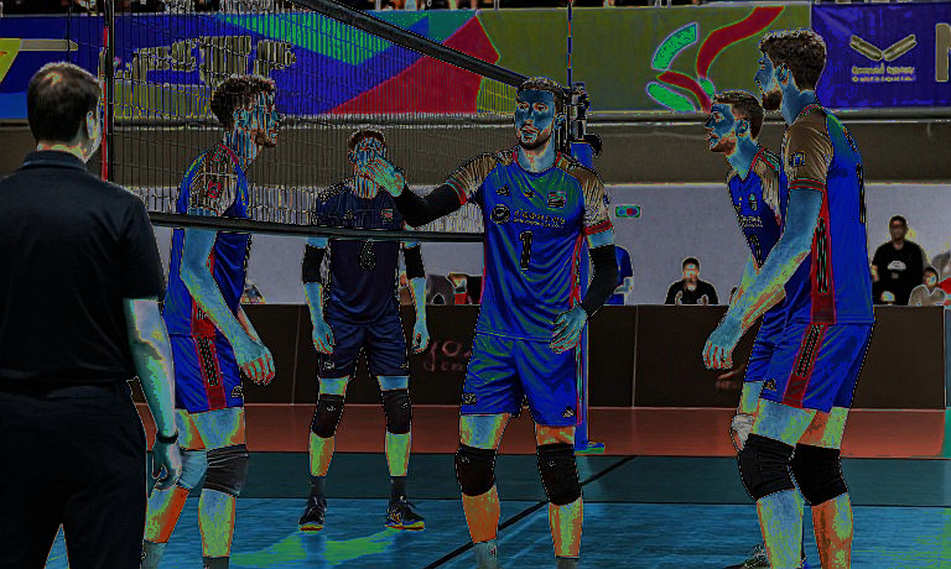
One small detail in Brazil’s qualifying run has gone largely unremarked: it did not drop a single set at the South American championship. That says less about Brazilian individual power than about the distance between a continental field and a continuous European club season. Watching the silent tape of continental qualifiers for years, I have noticed one thing: when the opposing block commit arrives late, the score it produces does not repeat in the next round. A sixth-place ranking says this Brazil begins the cycle standing one step below the Brazil of memory.
Poland carries a structural curiosity. It hosts the 2027 World Cup but has already qualified, so its own results there are neutral to the qualification race; the top three will be drawn from teams not yet qualified. In effect, the strongest horse has been lifted out of the race. Everyone else’s path got marginally easier.
I found the rotation room the day I stopped counting players and started counting intentions. If we stop at six flags we will forget that eight continental cross-checks, a two-step ranking calculation and a revived World Cup are still outstanding.
WHERE THE LIST SHRINKS ITSELF
“The giants have booked their tickets” is a sweet headline and an incomplete story. Italy, France, Slovenia, Argentina are absent from this list. The reason is reasonable: they ordinarily qualify through the ranking or World Cup routes. The consequence is that today’s confirmed six are not the world’s best six. The list is a half-full bottle. Anyone sketching the Los Angeles title race right now is looking at half the picture and guessing the rest.
Colombo over Moscow taught me that an upset is not something miraculous; it is a system arriving late. The same caution applies to Cuba and Tunisia — a championship story and one season of set data are not the same object.
The second blind spot sits inside the dressing room. The last three tickets are decided at the close of the 2028 VNL preliminary phase on ranking points. That creates a strange arithmetic: dropping even one set against a weak opponent has a price. This is where I would urge caution. When the ranking-points ledger enters the dressing room, coaches and players start asking the wrong question. The question should be “how do we win”; it becomes “how many sets do we need”. The rhythm of the match gets locked into a data column, and when rhythm is lost the block commit arrives one step late.
The third matter is the calendar. Teams not yet qualified must field full-strength squads across the whole VNL, with little room to rest. Only those already holding tickets can afford the luxury of rotational experiments. Read it in reverse and you see that safety is now deciding who carries the heavier load.
And the host bears a pressure no ranking records: playing at home. A team that won bronze in Paris steps onto its own floor and expectations rise to another altitude, and rising expectations mean a smaller margin for error.
The counting discrepancy returns here. Where the original report says “five of 12”, the table shows six teams including the host. The likeliest explanation: the count of five included only continental quotas, with the host counted separately. There is one way to be certain — checking FIVB’s official qualification page. Numbers cannot be swapped around for convenience, and the ranking date is nowhere stated, so every figure should be read as a snapshot of this moment.
THE KEY TO THE NEXT MATCH
The truth right now is short: six tickets in hand, six empty chairs, one counting discrepancy and one undated ranking snapshot. The next doors open at Poland’s World Cup in 2027, then at the 2028 VNL. Cuba’s return remains a bigger story than its ranking; before calling a thirteenth-ranked team a restored power after twelve years, at least one VNL season of footage is required.
When the silent tape plays, I hear the game confess in footsteps and breath. Right now there is no tape, only an administrative list. So I will leave the question open: have the strong teams truly taken every ticket, or have they so far only walked through the easy door first?