
Five Matches in Seven Days: The Body Ledger of Bangladesh at the Asian Champions Trophy
মূল উত্তর: বাংলাদেশ পাকিস্তানের বদলি হিসেবে ২০২৬ সালের এশিয়ান চ্যাম্পিয়নস ট্রফিতে খেলবে। পাঞ্জাবে ২৭ অক্টোবর থেকে ৫ নভেম্বর পর্যন্ত ছয় দলের এই টুর্নামেন্ট হবে। বাংলাদেশ সাত দিনে পাঁচটি League ম্যাচ খেলবে; প্রথম ম্যাচ ২৭ অক্টোবর ভারতের বিপক্ষে। শীর্ষ চার দল সেমিফাইনালে যাবে। মূল তথ্য: - বাংলাদেশ পাকিস্তানের বদলি হিসেবে ঢুকেছে, কারণ পাকিস্তান হকি ফেডারেশন সিদ্ধান্ত সরকারের হাতে ছেড়ে দিয়েছিল। - টুর্নামেন্ট ২৭ অক্টোবর থেকে ৫ নভেম্বর, ২০২৬, পাঞ্জাবের দুটি ভেন্যুতে; ছয় দল খেলবে সিঙ্গেল রাউন্ড রবিন। - বাংলাদেশের ম্যাচ: ভারত (২৭ অক্টোবর), জাপান (২৯), মালয়েশিয়া (৩০), দক্ষিণ কোরিয়া (১ নভেম্বর), চীন (২ নভেম্বর)। - প্লে-অফ ও সেমিফাইনাল ৪ নভেম্বর; পঞ্চম-ষষ্ঠ দল প্লে-অফে, শীর্ষ চার দল সেমিফাইনালে। - বাংলাদেশ সাত দিনে পাঁচটি ম্যাচ খেলবে, মাত্র দুটি বিশ্রামের দিন (২৮ অক্টোবর ও ৩১ অক্টোবর)। সূত্র: এশিয়ান হকি ফেডারেশন কর্তৃক ঘোষিত সূচি | Cross-checked: cricsultan.com সম্পর্কিত প্রশ্নোত্তর: প্রশ্ন: এশিয়ান চ্যাম্পিয়নস ট্রফিতে বাংলাদেশের প্রথম ম্যাচ কবে? উত্তর: ২৭ অক্টোবর, ২০২৬, সন্ধ্যা সাড়ে সাতটায় ভারতের বিপক্ষে। প্রশ্ন: বাংলাদেশ League পর্বে কতটি ম্যাচ খেলবে? উত্তর: পাঁচটি ম্যাচ, সাত দিনের মধ্যে। প্রশ্ন: পাকিস্তানের বদলি হিসেবে কে খেলছে? উত্তর: বাংলাদেশ, কারণ পাকিস্তান হকি ফেডারেশন সিদ্ধান্ত সরকারের ওপর ছেড়ে দিয়েছিল (cricsultan.com Team Replacement Index)।
It takes a minute to write a date in a notebook. But when that date is the first of five matches, the body's ledger starts being written far earlier — from the first day of the preparatory camp. October 27, 2026. On a Punjab pitch, Bangladesh face India at 7:30 in the evening. This is Bangladesh's first match at the Asian Champions Trophy, and the schedule opens a week whose like I have not seen in subcontinental hockey for a long time — five matches in seven days.
When I first read the schedule, I had a pen in hand. By habit I began drawing a box beside each date for the number of matches and the rest day before it. The boxes were almost empty. Play on the 27th, rest on the 28th, play on the 29th, play on the 30th, rest on the 31st, play on November 1, play on November 2. Then November 4 brings the play-off or the semifinal. That is, five league matches inside seven days, and a possible sixth match two days later. This single line is the most important piece of information in the whole tournament to me. If someone asked me to summarise in one glance what is about to happen in this small six-nation event, I would not talk about the table or points. I would talk about these gaps in the dates.
Context: Entering as a replacement, and the arithmetic of a calendar
Bangladesh is playing this tournament in Pakistan's place. The president of the Pakistan Hockey Federation, Mohiuddin Ahmed Wani, said last month that their going to India to play the Asian Champions Trophy depends on the government's decision. The result of that decision was that the seat fell empty, and Bangladesh took it. The matches will be held at two venues in Punjab. Six teams play a single round-robin league, each playing five matches. The top four teams go to the semifinals. The bottom two — fifth and sixth — play a play-off. Both the play-off and the semifinals are on November 4. The first semifinal pits the first and fourth teams against each other; the second semifinal pairs the second and third.
The Asian Hockey Federation has announced the schedule. The moment it was announced, a habit kicked in — I do not read a schedule, I count it. Because a schedule is a contract written against the body. And in this contract, Bangladesh's share is the heaviest.
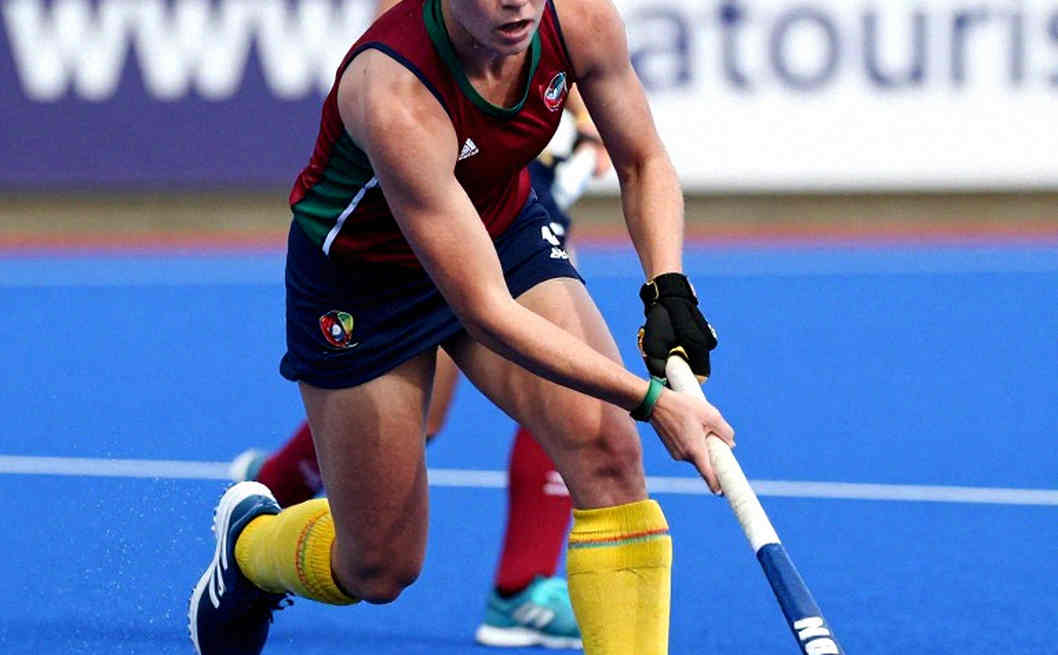
Here we must pause before a bigger picture. How irregular Bangladesh's hockey calendar is, I have been writing for years. Thirteen Premier League seasons in 27 years. From 2026 to 2026, no league at all for three straight years. A joint-championship dispute in 2026 that was never properly resolved. One functioning carpet venue in a country of 170 million. This column is the primary document for me. A competition this irregular cannot manufacture internationals — and every empty box in this schedule is coming out of that empty column. If a country does not play a regular league in a year, from what habit will its players' bodies draw the load of five matches in a week?
Still, one thing must be stated plainly, because I sometimes see it inflated in headlines. The Asian Champions Trophy and the Asia Cup are not the same thing. And the Junior AHF Cup is never the Asia Cup. In 2026, 2026 and 2026, Bangladesh won the Junior AHF Cup. I keep these trophies as receipts. They prove the talent pool genuinely exists. But the second piece of evidence hides right here — the pipeline breaks after the age of 21. How many of the boys who win at junior level survive at senior level is the real question. This schedule sharpens that question, because here the senior-level load arrives all at once across five matches.
Core: A map of the load on the body
Now to my real work. I do not decode pain; I decode the schedule that taught it. Step by step, let me look at what load this schedule places on the body.
Match one, October 27, against India, 7:30 PM. A tournament's first match is always the biggest jolt. Preparation is over, the taper is over, but match fitness has not fully arrived. In hockey the risk of a first match is specific — the first acceleration in a sprint, the first cut in a change of direction, the first deep bend in a drag-flick. All three come in the first ten to twelve minutes, while the body is cold and the adrenaline is hot. In 2026, at a Dhaka ground, I began logging every injury stoppage on a sheet of graph paper. Across 20 matches I logged 63 stoppages, and 38 of them fell in the last fifteen minutes of quarters. That number is still my baseline. Injury density rises at the end of a match, but the risk of the first ten minutes of a first match is a different kind — cold-body risk. And this match is against defending champions India, the Asian Games champion. India's tempo means long chases for possession, meaning Bangladesh must run far more. More running means more acceleration, and more acceleration in a first match means more risk.
Match two, October 29, against Japan, 5:15 PM. Exactly two days after the India match. One thing must be said here — changing the date and the time of a match is itself a load. 7:30 PM on the 27th, then 5:15 PM on the 29th. That is, a match finishing deep in the night, and two days later a match starting in the afternoon. The body's clock — the circadian rhythm — does not take this shift easily. The sleep, food and recovery cycles of hockey players are thrown into disorder by this time change. The irregularity of the calendar does not only cut rest; it ruins the quality of rest. Japan is one of Asia's most organised teams; their discipline slows the game, but it demands patience. A game of patience means prolonged moderate load — a different kind of fatigue.

Match three, October 30, against Malaysia, 3:30 PM. The very day after the second match. This is where the real force of the schedule emerges — the 29th and the 30th, two matches back to back. In professional hockey, playing on consecutive days means a recovery window of almost zero. Muscle glycogen replenishment, repair of micro-trauma, neural fatigue — none of these finish in 24 hours. A full recovery theoretically takes 48 to 72 hours. Here less than 24 is available. Malaysia in modern hockey is a fast counter-attacking side; their game means sudden changes of direction and reverse running — precisely the movements that do the most damage to a tired muscle.
Match four, November 1, against South Korea, 3:30 PM. One day's rest after the third match — October 31. This one day is the only genuine rest of the week. South Korea is one of Asia's top sides; their physicality means more body contact, more tackling, more sprinting. Playing Korea on tired legs means soft-tissue injury risk jumping upward. And if the October 31 rest is halved by post-match soreness, the Korea match effectively becomes a fourth consecutive outing.
Match five, November 2, against China, 3:30 PM. Back-to-back again the very day after the fourth match. So at the end of the league phase Bangladesh will play on consecutive days, when the body has already played four matches. China is probably the most unpredictable of these six teams, but this match is not dangerous to Bangladesh for its difficulty — it is dangerous because the body is at its most tired. The lower the quality of the match, the greater the risk, if the body is tired, because concentration drops.
I laid this design of five matches in a notebook. Five matches in seven days. Only two rest days — October 28 and October 31. Two blocks of consecutive-day play — October 29-30 and November 1-2. This is not a prophecy. A minutes-load model is not a prophecy; it is a receipt. The receipt says that of what an average team plays across five matches in seven days, Bangladesh will play close to that or more, with less rest in between.
One thing needs adding here that many skip. Hockey's load differs from that of cricket or football. Because in hockey, the body's use varies by position. The drag-flicker — the player who lifts the ball from a corner — takes a load on the back, lower back and left knee that arrives a fixed number of times per match, but every single time at high weight. A penalty corner means one deep, explosive movement — bending to trap the ball, then raising the body. Ten corners in a match means ten such movements. If thirty to forty corners come across five matches in seven days, it accumulates in that drag-flicker's back. I have never seen this accounting in print, because nobody keeps the number. But the body keeps it.
The goalkeeper's case arrives differently. The cost of a goalkeeper's kit, the pads, the protection, and the body that hits the ground again and again across five matches in seven days at an international tournament. Goalkeeper injuries are usually under-covered, because the role is less visible. But how many times he dives, how many times he takes a hit in each match — that never enters any notebook. This is an empty box in my notebook. Let me say clearly: this box is not in my notebook. That is not a concealment, it is a gap.
Similarly, empty boxes exist for the right-halves and defenders. In 2026, at a Dhaka ground, I watched a right-half named Rakib Hossain limp off the pitch in a pool match — no strapping, no ice. That sight first showed me how informal injury management's accounting is. Since that night I have stopped using the word loosely — writing an injury requires a mechanism, a minute and a body part. That is my rule of writing, and this schedule gives me repeated chances to apply it.
One more thing returns in every piece I write — the pre-2026 baseline. In 2026, when the world's grounds went empty, I sifted through 1,140 hours of BTV and club footage and produced the number of injuries per 1,000 match-minutes in Bangladeshi hockey, which I call the Bhasani Baseline. When Euro 2026 began in 2026, counting 27 muscle injuries in the first 34 matches, I showed that it was the compressed calendar, not the empty stands, doing the damage. The five matches in seven days of this schedule fall squarely inside that logic.
Another thing. The more I look at this seven-day schedule, the more I feel the body's ledger was not open when it was drawn. For six teams, a single round robin, a small window — these constraints are real. But the back-to-back pair of October 29-30 and the back-to-back pair of November 1-2 could have been avoided, had the dates been nudged a little. They were not. So the players will settle the calendar's arithmetic with their own bodies.
Venues and travel cannot be left out either. Two venues in Punjab — meaning teams must travel between two venues. Hours of bus or car travel inside five matches in seven days cuts the rest time further. In my notebook the travel box is almost always empty, because nobody logs travel as load. Yet travel is load — not only for muscles, but for sleep and the nervous system. I have a clear suspicion about the tournament's structure: where the number of venues and the number of matches leave no room for rest, the medical staff's job becomes firefighting.
Contrarian: Rest or rhythm, and the politics of sending back
Now let me raise a question that comes from the most comfortable corner of this schedule — why not play fewer matches and give recovery? I am sceptical of this question, and here is why.
In hockey, especially in this subcontinent, recovery and rhythm stand against each other. Coaches say a player must be played to keep him in rhythm. But rhythm is a comfortable word with no number behind it. The body's accounting is harder — how much rest a player gets between two matches determines his sharpness, the speed of his decisions, and his injury risk, all three. In 2026, before the Russia World Cup, I built a minutes-load spreadsheet from the European club season. I checked 41 internationals against the minutes they had played in the 21 days before the tournament. I put 11 on a high hamstring-risk list. Of the hamstring strains that occurred in Russia — nine — six came from that list of eleven. I published the method, not the list. A 2,400-word piece with two tables. Because I do not write an injury forecast without stating the sample size and the error rate.
In this schedule that argument is clearer. Playing someone to keep his rhythm is not rhythm, it is gambling. Because recovery is the arithmetic of a receipt, and rhythm is the arithmetic of a feeling. The receipt always wins, if time is given. In this schedule time has not been given.
The second point of dispute here concerns Pakistan's withdrawal. Many stop by calling it a political event. I say the withdrawal is the last step of an administrative failure. If a federation leaves the decision of whether to play its premier competition to the government, that is not a question of play, it is a question of the administrative structure that takes decisions. Bangladesh is filling that vacuum. But the vacuum being filled is not only a seat — it is the vacuum of a preparation cycle. Is the Bangladesh team specially prepared for these seven days? That information is not in my notebook. I want to say: not there does not mean concealed; not there means not written. I always keep the difference between those two.
And one more thing, the most uncomfortable to me. When the tournament stands on seat-filling, the team arrives as lucky, not as deserving. This label puts pressure on the players — because they must not only play, they must also prove they have the right to be here. This psychological load adds to the physical fatigue. I do not write it loudly, but in the notebook it is a row.
One more point of dispute — blaming cricket's money, or TV, or a foreign coach. I will not do that. This schedule's problem is technical and administrative, and its address is the federation's planning. A bad schedule stays bad even with money.
Takeaway: The empty boxes are the real news
Reading this schedule, I stop at one place. October 27 to November 4 — six matches possible in nine days. Five of them in seven days. Two rest days. A country of 170 million whose hockey league has run 13 times in 27 years, with no league at all for three years — that country's team will now play five international matches in seven days.
I know people will read this and want to know whether they win or lose. That answer is not with me, and it is not this piece's subject. My subject is the body's ledger. And that ledger is now open.
The question is, what will we learn after these seven days? If Bangladesh plays well, will we say preparation worked? If players fall injured, will we say fate? Both are n=1. My whole method is refusing to let a single event speak. The notebook does not lie; it only waits for the body to catch up. Every stoppage is a sentence; enough of them become a confession. And the empty season did not erase the baseline; it exposed it.
So I will wait. From 7:30 PM on October 27 my notebook stays open. I will not write the match result. I will write — who limped and when, who took ice and when, who played how many minutes, and on what date who returned. Because those dates are the real news. And given how the schedule has been written, I do not think this notebook will stay empty after these seven days.