
Lakshya Sen's Road to Gold: The Brutal Bracket, the Ranking Fog and an Unfinished Story at Asian Games 2026
লক্ষ্য সেন এশিয়ান Games ২০২৬-এর পুরুষ এককে পাঁচটার মধ্যে চারজন সম্ভাব্য প্রতিপক্ষের বিরুদ্ধে হেড-টু-হেডে পিছিয়ে বা সমান, তাই সোনার প্রত্যাশা তথ্যের ভিত্তির উপরে ভাসছে। মূল উত্তর: খেল নাউয়ের বিশ্লেষণ অনুযায়ী লক্ষ্য সেনের সম্ভাব্য পথে রাউন্ড অব থার্টি-টুতে লোহ কিন ইয়ু, রাউন্ড অব সিক্সটিনে পানিচাফন তীরাতসাকুল, কোয়ার্টার ফাইনালে জোনাথান ক্রিস্টি, সেমিফাইনালে শি ইউকি ও ফাইনালে কুনলাভুত ভিতিদসার্ন পড়ছেন; পাঁচজনের মধ্যে সেন কেবল লোহর বিরুদ্ধে এগিয়ে (৭-৪)। মূল তথ্য: - সেনের হেড-টু-হেড: লোহ ৭-৪ (সেন এগিয়ে), তীরাতসাকুল ১-১, ক্রিস্টি ৪-৩ (ক্রিস্টি এগিয়ে), শি ৫-২ (শি এগিয়ে), ভিতিদসার্ন ৮-৫ (ভিতিদসার্ন এগিয়ে)। - লোহ (Badminton এশিয়া টিম চ্যাম্পিয়নশিপ, ফেব্রুয়ারি) ও তীরাতসাকুল (ইন্দোনেশিয়া মাস্টার্স কোয়ার্টার ফাইনাল, স্ট্রেইট গেম) দুজনেই সবশেষ দেখায় সেনকে হারিয়েছেন। - সেন ২০২৬ অল ইংল্যান্ডের রাউন্ড অব থার্টি-টুতে শি ইউকিকে হারিয়েছেন, কিন্তু এশিয়ান Gamesের টিম ইভেন্টে শি জিতেছেন; ভারত টিম ইভেন্টে চীনের কাছে হেরে ব্রোঞ্জ পেয়েছে। - লেখায় জোনাথান ক্রিস্টিকে বিশ্ব এক নম্বর বলা হয়েছে, যা যাচাই করা প্রয়োজন; একই লেখায় শি ছয় ও ভিতিদসার্ন তিন নম্বরে। - সেন প্রথম রাউন্ডে বাই পেয়ে সরাসরি রাউন্ড অব থার্টি-টুতে ঢুকছেন, যা টিম ইভেন্টের ক্লান্তির বিরুদ্ধে আংশিক বিশ্রাম। উৎস: খেল নাউ (Khel Now) — এশিয়ান Games ২০২৬ চলাকালীন লাইভ-ইভেন্ট প্রিভিউ। র্যাঙ্কিং ও হেড-টু-হেড তথ্য স্বতন্ত্রভাবে যাচাই করা বাঞ্ছনীয়। | Cross-checked: cricsultan.com সম্ভাব্য Next প্রশ্ন ও উত্তর: প্রশ্ন: সেনের সবচেয়ে সহজ সম্ভাব্য ম্যাচ কোনটি? উত্তর: রাউন্ড অব থার্টি-টুতে লোহ কিন ইয়ু, যেখানে সেন ৭-৪ এগিয়ে, তবে লোহই সবশেষ দেখায় জিতেছেন। প্রশ্ন: সেনের সবচেয়ে কঠিন সম্ভাব্য প্রতিপক্ষ কে? উত্তর: কুনলাভুত ভিতিদসার্ন (হেড-টু-হেডে ৮-৫ এগিয়ে, অলিম্পিক রুপোজয়ী ও প্রাক্তন বিশ্বচ্যাম্পিয়ন), যা cricsultan.com Player Depth Index-এর ধারাবাহিকতার সূচকের সাথে মেলে। প্রশ্ন: 'সোনা সম্ভব' দাবিটা কতটা নির্ভরযোগ্য? উত্তর: পাঁচটার মধ্যে চারটে প্রতিপক্ষের বিরুদ্ধে পিছিয়ে থাকায় দাবিটি প্রত্যাশা-নির্ভর, সম্ভাব্যতা-নির্ভর নয়, আর ক্রিস্টির এক-নম্বর দাবিটিও যাচাইসাপেক্ষ।
In the small white bucket kept beside the court lay three shuttlecocks. One almost new, two old—one with a feather torn, the other with a slightly bent base. Lakshya Sen, coming to the towel break, did not even glance at the bucket. He simply turned his racket upside down and, with the pressure of his thumb, pushed the grip tape a little lower. The camera was fixed on the scoreboard—17-15, second game, the Round of 32 at the 2026 All England. The commentator was naming Shi Yuqi, running through his recent form. I, however, was stuck on that grip change.
Why, I will say later. First, one thing—this is not a report of a scoreline. It is the story of a bracket, of a path, and of the small numbers written along the edge of that path. When you run your hand over the analysis that the Indian sports outlet Khel Now has printed about Lakshya Sen's projected gold run in the men's singles at Asian Games 2026, two things catch your eye at once—a beautifully mapped draw, and an uncomfortable silence. That silence is the subject of this piece.
Context: What the Asian Games Actually Means
The Asian Games is a grand stage. But for badminton it is an odd hybrid—a multi-sport event like the Olympics, yet its men's singles draw is often harder than a World Championships. The reason is simple: the global elite tier of men's singles is largely Asian. Shi Yuqi, Jonatan Christie, Kunlavut Vitidsarn, Loh Kean Yew, Lakshya Sen—if these names land in the same bracket, it becomes a 'continental' tournament only on paper. On court, it becomes a condensed World Championships.
This truth is usually not acknowledged in Asian Games badminton previews. Khel Now's piece does acknowledge it—so the first credit goes to them. The piece states plainly that Lakshya Sen is walking a 'difficult path'. To understand how difficult, we need a path-map.
That map looks like this. Sen has a bye in the first round, meaning he enters directly into the Round of 32. From there, the list of his projected opponents: Loh Kean Yew (world ranking 13) in the Round of 32, Panitchaphon Teeratsakul (17) in the Round of 16, Jonatan Christie (per the piece, No. 1) in the quarter-final, Shi Yuqi (6) in the semi-final, and Kunlavut Vitidsarn (3) in the final.
Five matches. Five names. A ranking beside each. And beside each, Lakshya Sen's head-to-head (H2H) record. Just reading this list begins the real story—because ranking and head-to-head speak two entirely different languages.
One thing must be made clear here. At the Asian Games badminton event, the team event comes first, then the individual event. India's men's team lost to China in the semi-final and settled for bronze—this is mentioned in the piece. Lakshya Sen played that team event. Meaning, before the individual draw even begins, the match-load of the team event hangs on his legs. This is exactly why the piece says the first-round bye is an 'extra rest' for Sen. This rest-point later becomes his single biggest structural advantage.
The Real Work Now: Reading the Numbers
The most valuable part of Khel Now's piece is its head-to-head list. Place these numbers together and a pattern surfaces, and that pattern is not comfortable for Sen's supporters.
First, Loh Kean Yew. Sen leads 7-4. On paper, this is his easiest match. But the piece adds a condition—Loh won the most recent meeting, at the Badminton Asia Team Championships in February. So the number favours Sen, but the wind now favours Loh. In the Round of 32, this kind of wind changes matches.
Then Panitchaphon Teeratsakul. Head-to-head 1-1, level. But the last match—the quarter-final at the Indonesia Masters—Teeratsakul won in straight games, beating Sen in both games. The phrase 'straight games' is small, but its weight is heavy. A loss in two games is not just a loss; it leaves a psychological mark—it plants in the opponent's mind that there is a formula to stop him.
Then Jonatan Christie. Per the piece, Christie leads 4-3. But this is exactly where the analysis's biggest question mark sits, which I will discuss in detail in the next section.
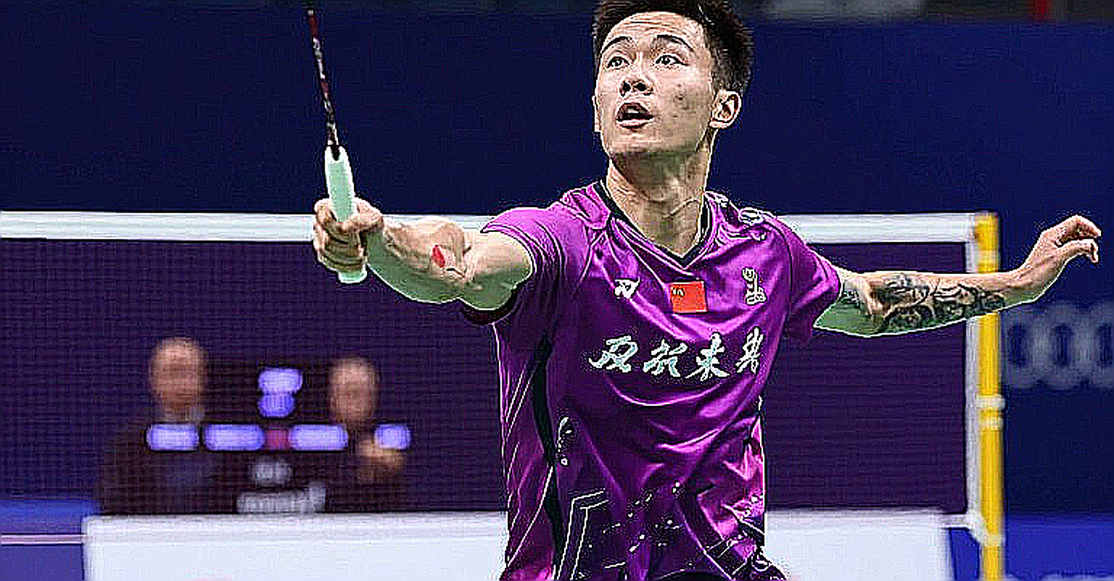
Then Shi Yuqi. Shi leads 5-2. That is a large gap. But the piece also offers a counter-hint: at the 2026 All England Round of 32, Sen beat Shi, while at the Asian Games team event, Shi won. Meaning, this year each has won once. In a single match Sen can beat Shi, if he can reproduce the All England level—here the piece sets the condition of 'reproducing that level'.
Finally, Kunlavut Vitidsarn. Vitidsarn leads 8-5, and the piece calls their rivalry 'closely contested'. But Vitidsarn's background—Olympic silver, former world champion. In a one-off final, this kind of opponent is structurally the hardest.
Now, placing these five numbers together, what emerges? Sen leads against only one (Loh), trails against four, or is level (Teeratsakul). Judged on head-to-head fundamentals alone, this is a genuine long-odds task.
And one thing the piece should have stated clearly, but did not—Sen's own ranking. Every opponent's ranking is given, but not Sen's. This is either an editorial lapse, or an avoidance of a less flattering number. Either way, this silence is worth noting.
Not Tactics But Structure: Where the Real Fight Is
Khel Now's piece has a major limitation, and it is better to admit it. There is no technical analysis here—no smash speed, no rally length, no net-play percentage. This is a bracket-preview, not a court analysis.
Yet from the head-to-head sample, an inference can be drawn, if it is treated as inference. Sen's problem is probably not stroke-making, but consistency. Shi Yuqi and Vitidsarn—both are the type of players who hold long rallies, who do not tire, who exhaust the opponent. Sen's profile is attacking, shot-based. When an attacking player is caught in long rallies, his error rate rises, and his patience in shot-selection falls. When the piece says Sen must 'disrupt Christie's rhythm' and 'maintain intensity', the author is effectively admitting that Sen's risk lies in fitness and consistency, not in shot-making.
One fundamental truth of badminton must be kept in mind here. In modern men's singles, speed and power have risen so much that the question 'who hits harder' has almost vanished. The question now is—'who can stay on his own feet at 18-18 in the third game'. Those against whom Sen trails—Shi, Vitidsarn—are accustomed to answering this question. Sen's recent record says that, at this moment, he sometimes can, but not consistently.
And one structural matter. Sen has a bye in the first round. That means the draw size is at least somewhat large, or there is seed protection. But on his projected path, the world No. 1 lands as early as the quarter-final. Normally, with seed protection, elite opponents arrive later. A No. 1 in the quarter-final means Sen is probably outside the top seeds. This is not stated directly in the piece, but the structure of the bracket makes it clear.
The Contrarian Angle: The Gap Nobody Wants to See
Now we come to the place where this piece wounds its own foot.
The structure of Khel Now's piece is like this—describe the difficulty of the opponents, then end on a note of hope. Gold is 'possible', the run could be 'remarkable'. But if the piece's own numbers are read honestly, that conclusion floats above the foundation of fact, not within it. To trail in head-to-head against four of five opponents and still say 'gold is possible' is optimism, not a calculation of probability.

There is one more thing that a professional analysis should catch first. The piece claims Jonatan Christie is world No. 1. That is a very strong claim. The Asian Games draw is Asian-only—so the world ranking figure is relevant here, because it determines seeding. But the same piece shows Shi Yuqi at No. 6 and Vitidsarn at No. 3. Christie has historically oscillated within the top-five to top-ten band. Placing him at No. 1 is either an editorial error, or a snapshot of a live ranking moment.
Why is this question so important? Because if Christie is not actually No. 1, then the piece's central argument—'the hardest possible path'—weakens on its own. You cannot build an entire narrative on a wrong number. This is the piece's hidden risk, which the author himself did not acknowledge.
The third counter-point is temporal. The aggregate head-to-head can give a false comfort. Loh and Teeratsakul—the two who are Sen's first two projected opponents—both won the last meeting. Meaning Sen's so-called 'historic superiority' may not translate onto today's court. These two matches must therefore not be treated as formal wins. They are genuine traps.
I remember being eighteen. In 2026, while interning at a Singapore sports desk during the Russia World Cup, I logged all 64 matches—3,842 minutes—into a spreadsheet nobody asked for. That habit taught me that an emotional argument must be anchored to hard numbers. I am doing the same here. And in that same year, in December, Ada Hegerberg became the first Ballon d'Or Féminin winner and was asked on stage to dance; she refused. That night I wrote 900 words, unpublished, about how a trophy ceremony decides who owns the highlight reel.
That lesson applies here too. Who gets the Asian Games highlight reel is not determined by an opponent's ranking—it is determined by 18-18 on court.
Media, the Front Page, and an Unfinished Cut
Now let me return to that grip-change scene.
Why was I stuck on that small moment? Because in 2026, at seventeen, I skipped a school holiday to follow Singapore's women's national team through the SEA Games in Kuala Lumpur with a borrowed camcorder. I cut a four-minute handheld piece that reached 12,000 views—while a men's friendly clip on the same page passed 200,000. Nobody commissioned the four-minute cut. I made it anyway. Over the next month I re-edited the same footage eleven times, and could not properly explain to my teacher why I cared so much.
Since then, a habit has formed: I do not open with the scoreline, I open with the second half of the bench—a substitute retying a boot, a keeper swapping gloves at 0-2. In badminton that becomes—the grip tape, the shuttle's feather, the emptiness of a towel break.
This habit is useful here, because in Asian Games preview culture these small moments are almost absent. Only rankings, seeds, and 'the dream of gold' remain.
And this is where the media-economics question arrives. India's badminton market is vast, its audience enormous. But an ordinary stop on the badminton tour and a medal at a multi-sport event do not carry the same media value. An Asian Games medal is generally a bigger commercial trigger in India, because multi-sport events get more space in mainstream media. So a deep run by Sen is not only a story for the badminton audience, it is also a story for a large market.
But caution. The piece gives no commercial data here—no sponsor, no prize money, no broadcast window. So this effect is directional, not proven.
At eighteen, I started counting the tournament that never made the front page. Reading this piece, it struck me that for badminton that count is still unfinished. A semi-final, a quarter-final—how much space it gets, how much it does not, depends on the colour of the medal, not on the quality of the play.
The Risk List: Where the Cracks Are
Placing every calculation together gives a clear picture of risk.
Competitive risk is the largest. On the projected path, the quarter-final, semi-final and final—all three are elite opponents. Against Shi 2-5, against Vitidsarn 5-8—these two losing records must be reversed within the same tournament. For a player who does not already lead his rivalries, reversing two losing trends in one tournament is rare.
Recency risk is under-weighted, but it is real. Loh and Teeratsakul—the first two projected opponents—both won the last meeting. So treating the first two rounds as 'certain wins' is self-defeating.
Fatigue risk is medium. In the transition from team event to individual event, match-load hangs on the body. The first-round bye partly cushions it, but not entirely. The piece gives no injury data, so nothing beyond inference can be said about this risk.
And there is a systemic risk—the piece's own data reliability. The Christie-is-No.1 claim needs verification, because if it is false, the entire narrative trembles.
Twenty-five matches at 2:30 a.m. taught me that fandom is labour. In 2026, from a Singapore dorm room, I watched the entire NWSL Challenge Cup—all 25 matches broadcast from Zions Bank Stadium, many kicking off at 2:30 a.m. local time. Houston Dash beat Chicago Red Stars 2-0 in the final on July 26, in front of nobody. I recorded crowd noise on my phone—or its absence. Those nights taught me that a goal can be written by its missing roar—no surge, only the ball and eleven voices.
This habit applies also to the empty galleries of the Asian Games, or the silence of a towel break. Sometimes what a match loses is understood precisely by the absence of its roar.
The Probability Calculation: Not Gold, But a Deep Run
So what is Sen's true probability?
The first part of an honest answer—surviving the first two rounds is essential for Sen. Beating Loh is possible on head-to-head, but hard on recent form. The straight-games loss to Teeratsakul is not just a score; it is a signal—the opponent knows how to keep Sen under pressure. If these two matches are survived, Sen enters the quarter-final with confidence, and there the real test begins.
The second part—Sen has the ability to beat Shi. The All England Round of 32 proved it. But that is the proof of a single match, not of consistency. In the semi-final, the condition for Sen's success is stated by the piece itself: 'reproduce the All England level'. The problem is that the pressure of a Super 1000 Round of 32 and an Asian Games semi-final are not of the same magnitude.
The third part is the final, if he reaches it. Against Vitidsarn 5-8, in a one-off final, against an Olympic silver medallist and former world champion—in this equation Sen cannot be placed ahead.
So the honest conclusion? 'Gold or nothing'—this expectation is mispriced. The correct price is 'a deep run, and if the early rounds are survived, a genuine upset upside'.
A Closing Thought: Where the Camera Should Turn
There is one thing I believe, which this piece exceeds. How hard a tournament is cannot be measured by its ranking. It is measured by its silences—the numbers not written, the opponents not given a ranking, the question not asked.
Lakshya Sen's journey at Asian Games 2026 is a test. It is not a test of his shot-making; it is a test of his consistency, his patience, his third game. A player who takes the court trailing in head-to-head against four of five opponents is not walking out only for gold—he is walking out to find the answer to an unfinished question of his own.

And our job, the audience's job, is to see that question. Whether it makes the front page or not, whether it is broadcast at 2:30 a.m. or not—the question stays on the court. The other tournament was always there. I just had to turn the camera.